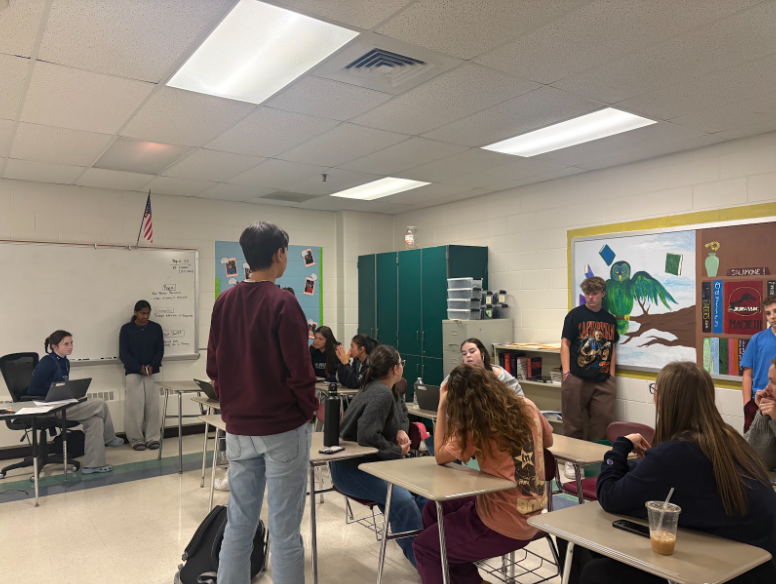


Last year Hollis Brookline High School started a program called Advisory, a supposedly meaningful time dedicated to community building and non-academic activities meant to improve mental health. Groups of students were assigned an advisor to positively lead their group and manage the time efficiently. However, a year into advisory, it is still unclear if it holds any real value.
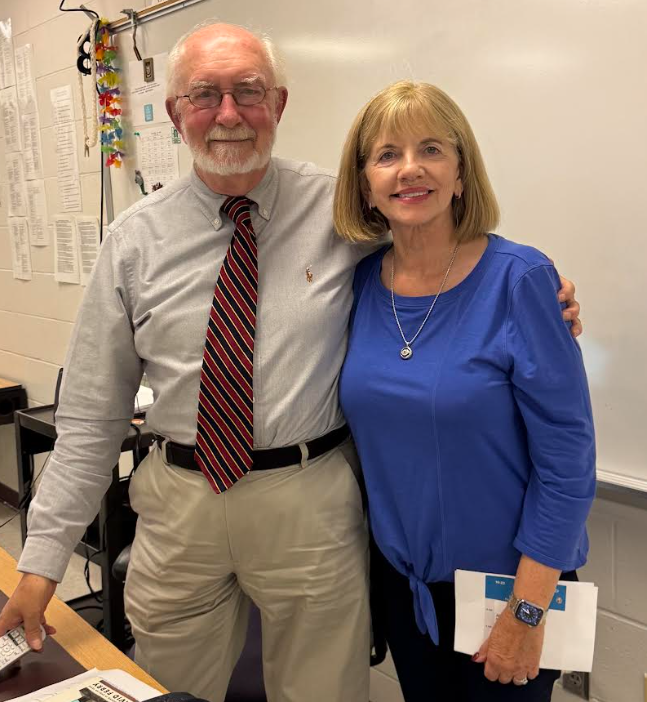
In order to start the Advisory program, HBHS put together a group called the Advisory Leadership Team (ALT), to research other schools’ advisory programs and put together a plan for successes. One of the members of ALT is Linda Illingworth, a long time HBHS English teacher who has worked on both the yearbook and the school newspaper. Illingworth said that out of everything she has done with HBHS, advisory is what she is most proud of. She views the purpose of advisory as supporting the whole person, and also to support the community as a whole. The three main sub-purposes are creating connection, developing skills, and building a community with good communication.
In order to ensure that these purposes are being carried through, the ALT meets casually once a week and then more deeply once a month. The monthly meetings are attended by Principal Jacob Hess, Assistant Principal Traci Lane, grade level coordinators, and many more administrators and teachers.
Their plan for the first year was to build connections, and this year their main focus has shifted to developing skills and self-awareness. Their main way of supporting advisors to follow through with these plans is creating a sheet of possible activities to enact during advisory time.
While the ALT does their best to support independent advisors like Jordan Cormier, the burden of planning activities that are more customized to her group falls on her. Although Cormier does view the ALT’s ideas as helpful tools for teachers who don’t want to take on too many responsibilities.
Cormier has been very successful in coming up with fun activities, some of which include a Trader Joe’s snack taste test and a Rotten Tomato guessing game that allows her community to bond over movie trailers. Cormier hopes that advisory has become a time for non-academic community building and a place for students to connect to staff on a more personal level; she believes that her advisory has achieved this, evident in her senior advisees becoming friends.
One student from the junior class participating in advisory is Izzy Kifer. Although Kifer admits that she has made friends in advisory, she doesn’t seem to share the same excitement for advisory as the HBHS staff. Kifer said, “I have a complex relationship with advisory. Advisory is fun at times. Sometimes we do fun activities, but overall I do find it kind of a pointless break in the day. It doesn’t really serve a lot of purpose. I’ve made friends there, but then also I kinda don’t see the point of it.” Kifer went on to say that if advisory were to stop, all she would really miss would be seeing her friends for 15 minutes. I can’t help but to feel the same indifference towards advisory as Kifer since I have yet to feel that it contains any significance in my daily life.
However, Kifer has had an even more multiplex experience with advisory than I have. This year, her advisor has switched because her previous advisor, Nick Housman left the school at the end of last year. Kifer describes this experience as “It was a difficult transition, because when advisory started,we were told we were going to have the same teacher all three years and even though it was initially something that no one was really excited about, I think there was a point where we were becoming close with our advisory teacher, and now we just switched away from that. And I think it destroys the point just a little, because we didn’t get to have that bond with that teacher for those three years.”
Kifer’s experience is unique, but does seem to hold meaningful value in the inquiry of the purpose of advisory, since one of the main purposes repeatedly stated was for students to create a strong bond with a trusted adult in the school and with their fellow advisees.
One view on how to improve advisory that both Kifer and Cormier shared would be to extend the time. Kifer said, “…in my experience –and I’ve had a lot of it considering I’ve had two different teachers, so it’s not just a problem with one teacher– it’s that it’s not a long enough time to do anything, so you kinda just sit in there while your advisory teacher asks you what you want to do, and we just never end up doing anything other than just sitting around and talking. So I think maybe if there was more of a need for it –more of a purpose– or if advisory were used for when we had mandatory meetings, some of the advisory time could be allocated towards that. I think that would be very helpful so that we wouldn’t use Cav-Block time as much.”
Similarly to Kifer, part of the reason I view advisory as so pointless is because my advisory can’t even finish a coloring sheet in the time we have together, let alone build long lasting meaningful relationships.
Cormier, similar to Kifer, has had multiple experiences with advisory and has come to a similar conclusion. Cormier said that when she observed Souhegan’s advisory it was very intense, lasting 30 minutes everyday, which was kind of a lot. However, she does believe that instead of 15 minutes a day, it could be more effective to do a 45 minute block once a week. I also believe this would at least be worth the consideration of the ALT, because a longer block one a week rather than shorter blocks more frequently would allow our advisors to embark on more complex and enjoyable tasks.
Although I wish I could denounce advisory all together and tell you that the solution to making kids feel less academic pressure is to focus more on learning than testing, and that the best way to have kids be engaged in their community is to give them less homework so that they can have more time to actually do things within that community, it is hard to argue the results that ALT is seeing.
Illingworth said that teachers are talking to each other more, and are talking to other teachers outside of their departments more. This illustrates the strong sense of community that advisory is trying to rebuild that was negatively affected by the pandemic. Illingworth went on to say that one of her favorite aspects of advisory is that it emphasises that success in life isn’t necessarily about academic achievement or your career but rather success is about the relationships you build and foster.
I’ll admit that my first impression of advisory was rather grim, and to be honest I still don’t see an extensive amount of value in it. However, I am willing to be optimistic and believe that maybe with more time, the value that others see in advisory will become more evident to me and my fellow skeptical classmates. I’m also willing to have faith that the ALT will continue to work towards an improved advisory, whether this means making it longer or simply spreading more structured ideas of fun activities.